‘Pakistani art has always had a place
in the global art conversation’
“I want the artwork to offer something different to everyone, whether it evokes memories, heritage, identity, belonging, or simply a personal emotional connection,” says Wala Waseem, Doha-based Pakistani artist and art teacher.
By Mudassir Raja | Published Oct 17, 2026
What does home look like when your canvas is stretched across two worlds? For Doha-based Pakistani artist Mala Waseem, the answer lies somewhere between heritage and evolution.
Multidisciplinary Artist Mala has established herself as a known and respected creator in Qatar. She recently shared her views on her art, life, and experiences in an interview with PakPrism.
Could you tell us about your artistic journey and what first inspired you to pursue art as a form of creative expression?
My artistic journey has been an ongoing exploration of cultural memory, personal narrative, and social values. Over the years, my practice has evolved through a combination of personal experiences, cultural influences, and a deep curiosity about materials and visual language. With more than 16 years of experience as an art educator and artist in Doha, I have exhibited locally and internationally. For me, art is not only a form of creative expression but also a way of connecting, communicating, and reflecting on our shared human experiences.
My inspiration to pursue art as a professional career began during my early school and college years, a particularly meaningful moment came when I received an award from the late scholar and writer Fatima Surriya Bajia at a Sindh Intermediate Colleges art competition. She encouraged me to continue with the same passion and to keep creating art as a way of serving humanity. Her wise words stayed with me and became a guiding force.
They inspired me to pursue a four-year Diploma in Textile Design at Karachi School of Arts, followed by a Bachelor’s in Education from the University of Karachi and an MA in Visual Arts from the National College of Arts, Lahore. I later continued my professional development through a writing course at the Emily Carr Institute of Art and Design, Vancouver. These experiences have shaped my journey as an artist and educator and strengthened my belief in the power of art to connect, inspire, and contribute to society.
How has your Pakistani heritage influenced your artistic style, themes, colours, and choice of subjects?
Being a South Asian artist, born and raised in the metropolitan city of Karachi, I grew up observing and absorbing the social and political changes that shaped the city from the 1980s through the 2000s. These experiences naturally found their way into my early artwork, where I explored relationships, regional identity, and social and political issues within society. I addressed many of these concerns through my installation work during my degree show in 2002.
Later, after moving to Canada and then Qatar, my practice gradually evolved towards a deeper exploration of my roots and cultural connections. I became increasingly drawn to the visual language and symbolism of Mughal miniature painting, particularly its intricate details, compositions, motifs, and use of gold and silver. My work today brings these traditional influences into dialogue with minimalism and contemporary materials, allowing me to reflect on cultural memory, identity, transformation, and my connection to South Asian heritage.
Living and working in Qatar, how has the Gulf’s diverse cultural environment shaped your perspective as a Pakistani artist?
Having been a resident of Qatar for the past 16 years, the country has had a profound influence on both my artistic practice and my growth as an artist. Living in such a culturally diverse environment has broadened my perspective and given me the opportunity to engage with artists and communities from different parts of the world.
Qatar has also provided me with valuable opportunities to grow and establish myself as a Pakistani artist within the Gulf’s international art community. The country offers a wide range of cultural platforms, galleries, exhibitions, residencies, and open-call programs that encourage artists living here to showcase their work. I have been privileged to participate in several of these initiatives, which have allowed me to connect with diverse audiences, exchange ideas, and represent my cultural heritage through my art. These experiences have greatly enriched my artistic journey and strengthened my identity as an artist living and working in Qatar.
What emotions, stories, or ideas do you hope viewers experience when they encounter your artwork?
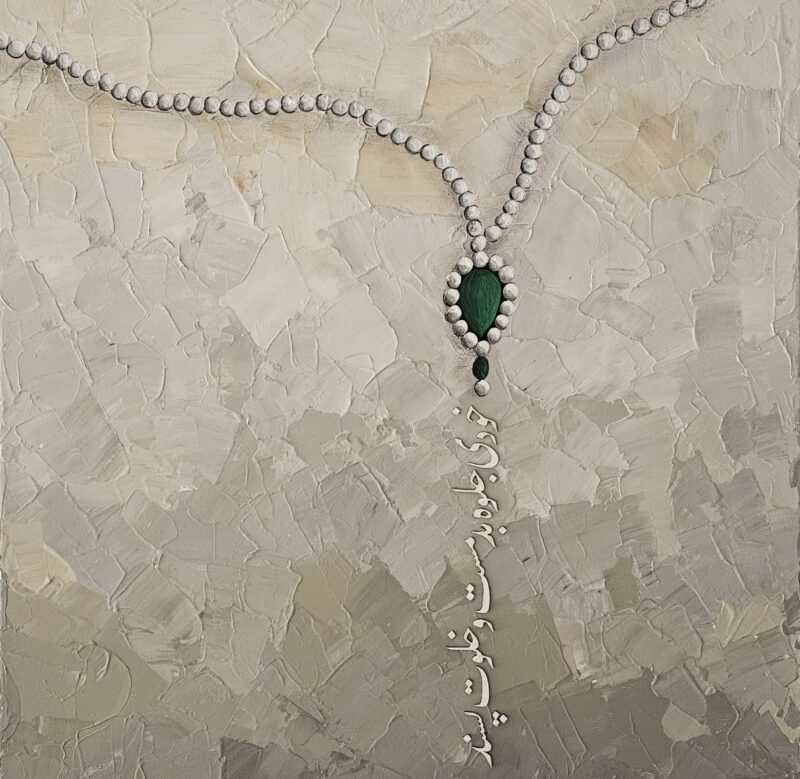
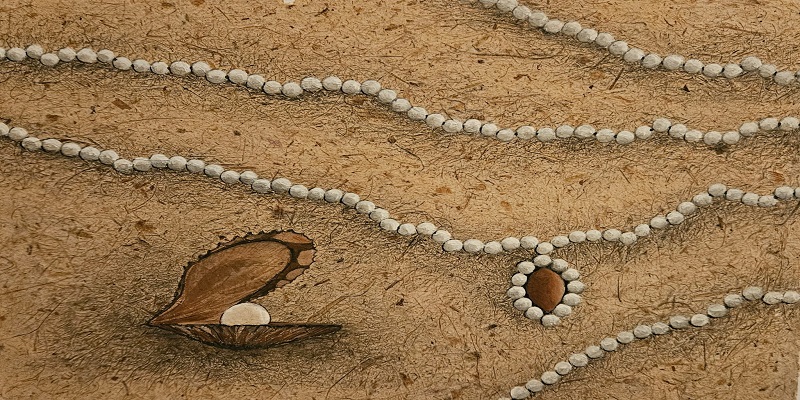
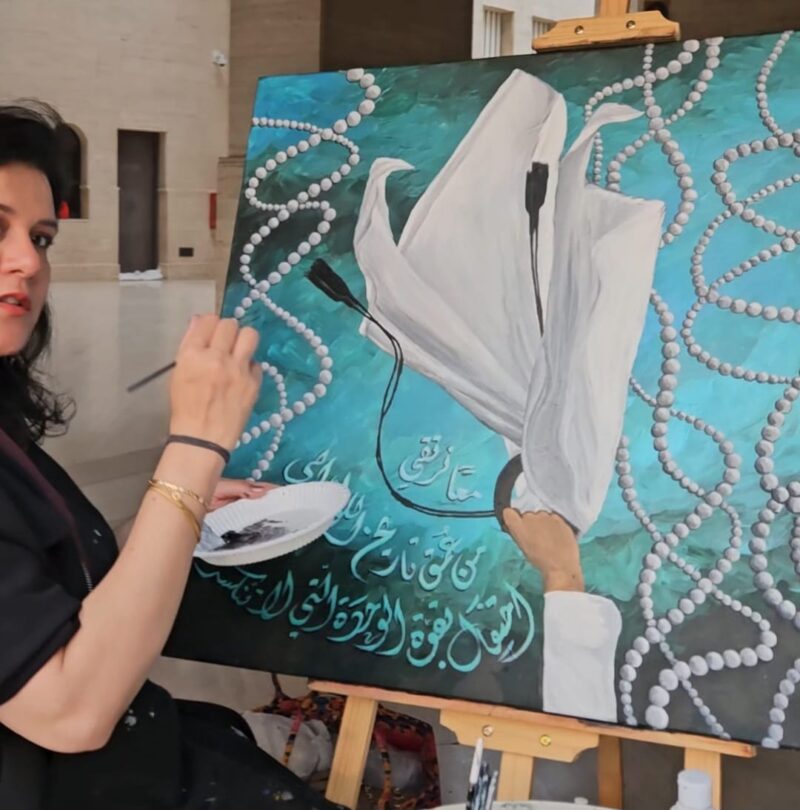
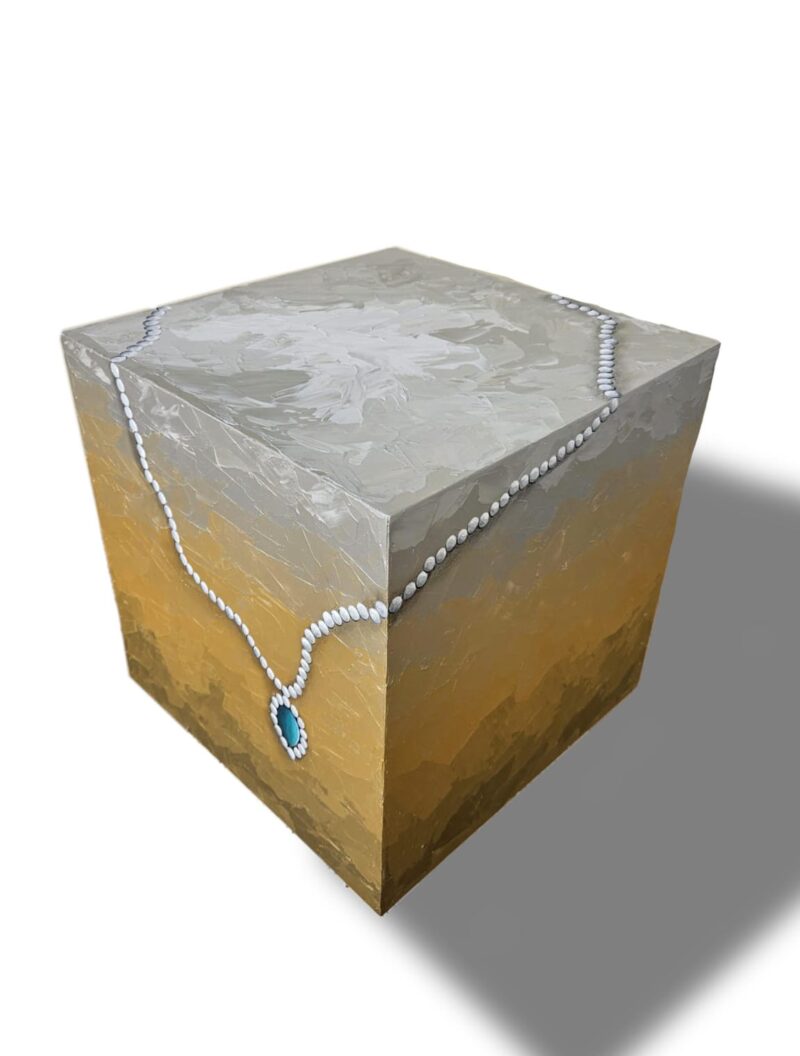
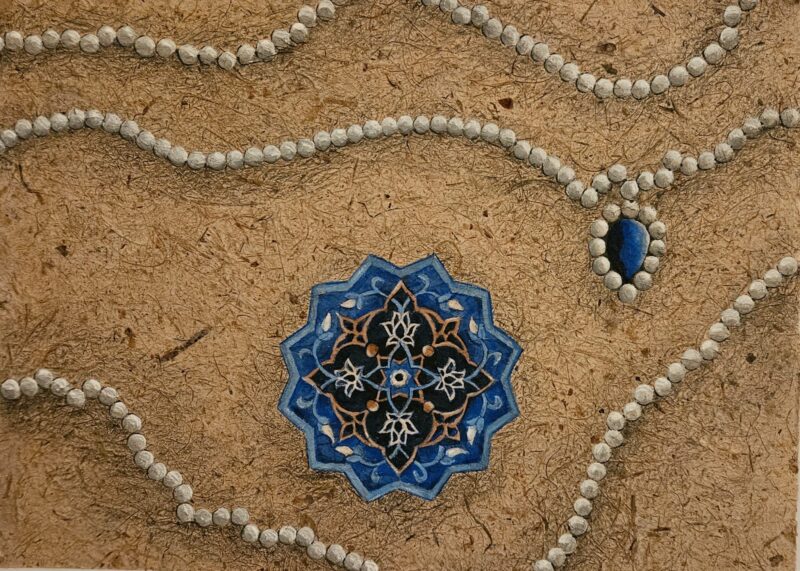
My recent body of work, ‘Necklaces of Narratives’, tells stories of the past through the symbolism of a pearl necklace. For me, the pearl has multiple layers of meaning. It connects to Qatar’s history and its pearl diving heritage, but it is also deeply personal, my name, Mala, is an Urdu word meaning with a pearl necklace. The pearl necklace also carries a significant place in South Asian miniature painting, where it appears as an important historical visual motif.
Through handmade paper, floating pearl necklaces, and miniature inspired motifs, I bring together my identity, my connection with Qatar, my South Asian roots, and the histories of artisans and their craft. Each pearl represents an individual bond, while the necklace suggests how we are connected and stronger together.
I hope viewers discover their own stories within the work. Like an open book, I want the artwork to offer something different to everyone, whether it evokes memories, heritage, identity, belonging, or simply a personal emotional connection.
As a Pakistani woman artist living abroad, what unique opportunities and challenges have you encountered in establishing your artistic identity?
I feel privileged to have received many opportunities as a woman artist living abroad, particularly in Qatar. I have experienced a strong sense of support and encouragement for women from different nationalities to grow, participate, and establish themselves professionally. Qatar’s multicultural environment has given me valuable platforms to exhibit my work and develop my identity as an artist.
One of the challenges, however, is being physically away from Pakistan and its artistic community. Although I have exhibited internationally and remain representing my roots, living abroad means that new art curators, critics, and art professionals in Pakistan may not always be aware of my current practice and achievements. I believe maintaining these connections from abroad is important so that women artists like me can continue contributing to Pakistan’s contemporary art landscape.
How do you see the role of Pakistani artists in promoting the country’s culture, heritage, and contemporary identity on the international art scene?
I believe Pakistani artists have a very important role in introducing the richness and diversity of our culture to the international art world. Wherever I travel, I am always proud to see Pakistani artists represented in major museums and international exhibitions. The Pakistan Pavilion at Expo 2020 Dubai, for example, created tremendous international visibility, while MANZAR at the National Museum of Qatar brought together a remarkable range of Pakistani art and architecture and created a significant platform for our artistic heritage in the Gulf.
We have also come across to see the works of Pakistani artists in international institutions such as the British Museum, the Metropolitan Museum of Art, and other major museums. For me, this is a reminder that Pakistani art has always had a place in the global art conversation.
As Pakistani artists living and working internationally, I feel we can contribute by sharing not only our traditional heritage but also our contemporary stories, individual experiences, and evolving identities. Through our work, we can create cultural bridges and help audiences understand Pakistan through many different perspectives.
What are your future artistic ambitions, and are there any upcoming exhibitions, projects, or new directions in your work that you would like our readers to know about?
At this stage of my journey, I am focusing strongly on my role as an art educator, as teaching has always been an important part of my practice, as it allows me to learn more. I find great fulfillment in sharing knowledge, encouraging creativity, and helping others discover their own artistic voices.
Alongside education, I am currently developing several new bodies of work and artwork series that I am planning to showcase through various platforms in 2027. These projects are allowing me to further explore my ongoing interests in cultural memory, identity, heritage, and personal narratives while experimenting with materials and visual approaches.